Tutorial
"Advanced Dynamic Modelling of Electrical Machines for Nonlinear Control of Variable Speed Drives"
The tutorial describes and analyses some advanced dynamic models of electrical machines conceived to be the backbone of high performance nonlinear control techniques. The underlying idea is to have at disposal advanced controllers embedding a better knowledge of the machine behaviour in a wider range of operating conditions, in order to improve the drive dynamic performance in the same operating range.
The first part is devoted to the description of classical dynamic models of induction motors (IMs) and Synchronous Motors (SMs), with particular focus on the simplifying assumptions and related choice of the model state variables. The machine operating conditions in which such simplifying model assumptions lead to an inaccurate model result are identified, highlighting the related effects on the control performance. Starting from this analysis, some of the simplifying assumptions are dropped, specific machine effects are properly modelled and the related dynamic models are derived and expressed in space state form. In particular, the following dynamic models are described:
- Dynamic model of the rotating induction motor (RIM) accounting for both magnetic saturation and iron losses;
- Dynamic model of the linear induction motor (LIM) accounting for dynamic end effects;
- Dynamic model of the linear induction motor (LIM) accounting for dynamic end effects and iron losses;
- Dynamic model of the synchronous reluctance motor (SynRM) accounting for magnetic saturation;
- Dynamic model of the synchronous reluctance motor (SynRM) accounting for magnetic saturation and iron losses;
The second part is devoted to the description of advanced nonlinear control techniques exploiting the previously described dynamic models. The input-output feedback linearization control (FLC) has been chosen, since it is inherently a model-based controller, whose dynamic performance is deeply related to the underlying model and related parameter. After a brief description of the FLC approach, the following nonlinear controllers are described and validated by suitable experimental results:
- Feedback Linearizing Control of Induction Motor Considering Magnetic Saturation Effects;
- Input-Output Feedback Linearization Control of Linear Induction Motors Including the dynamic End-Effects;
- Input–Output Feedback Linearization Control of a Linear Induction Motor Taking Into Consideration Its Dynamic End-Effects and Iron Losses;
- Feedback Linearization Based Nonlinear Control of SynRM Drives Accounting for Self- and Cross-Saturation;
- Adaptive Feedback Linearization Control of SynRM Drives With On-Line Inductance Estimation.
Organizers
 |
Prof. Marcello Pucci Institute of Marine Engineering (INM), National Research Council of Italy (CNR), Palermo, Italy BIO: Marcello Pucci received the MS degree and the Ph. D. degree in electrical engineering from the University of Palermo (Italy) in 1997 and in 2002, respectively. From 2001 to 2007 he has been a researcher and from 2008 to 2019 he has been a senior researcher at the Section of Palermo of the Institute on Intelligent Systems for the Automation (ISSIA), National Research Council of Italy (CNR) Italy. Since 2020 he has been a Director of Research of the Institute of Marine Engineering (INM), CNR, Italy. He has held several courses at the University of Palermo, Italy, University of Belfort Montbeliard (France), University of South Pacific (Fiji) and University of Rome Tor Vergata (Italy).He has coordinated several scientific projects in the field of electrical engineering. He currently serves as Responsible of Palermo of INM-CNR. His major research interests are electrical machines, control, diagnosis and identification techniques of electrical drives, intelligent control and power converters, wind and photovoltaic generation, micro-grid control and management. He is a senior member of the IEEE. His current google scholar h-index is 42. He is an IEEE Senior Member. |
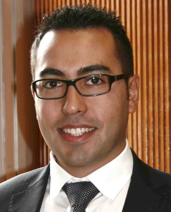 |
Dr. Antonino Sferlazza University of Palermo, palermo, Italy BIO: ANTONINO SFERLAZZA received the master’s degree in automation engineering and the Ph.D. degree in mathematics and automation from the University of Palermo, Palermo, Italy, in 2011 and 2015, respectively. In 2013, he was a Visiting Ph.D. Student with the University of California at Santa Barbara, Santa Barbara, CA, USA, in the field of modeling and analysis of stochastic hybrid systems. From 2016 to 2017, he was with the University of Palermo, as a Junior Researcher. From 2017 to 2018, he was a Researcher with LAAS CNRS, Toulouse, France, working in the field of power converter control. He is currently Professor in systems and control engineering with the University of Palermo. Prof. Sferlazza serves as an Associate Editor for the European Journal of Control, and he is a Technology Conferences Editorial Board member of the IEEE Control System Society. His research interests include the development of feedback control algorithms for nonlinear dynamical systems, optimization techniques, estimation of stochastic dynamical systems, and applications of control of electrical drives, power converters, and mechanical systems. He is a senior member of the IEEE. His current google scholar h-index is 26. |